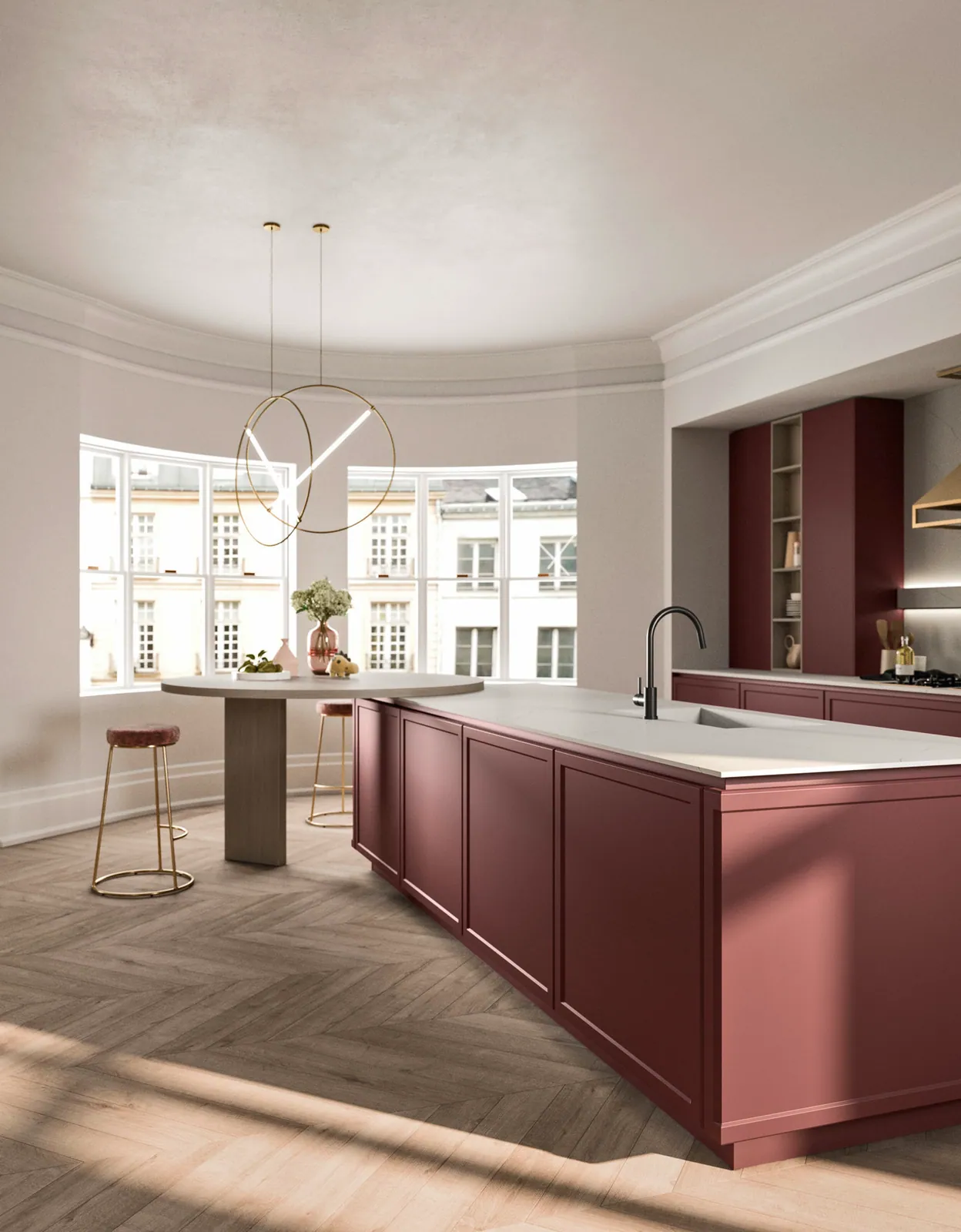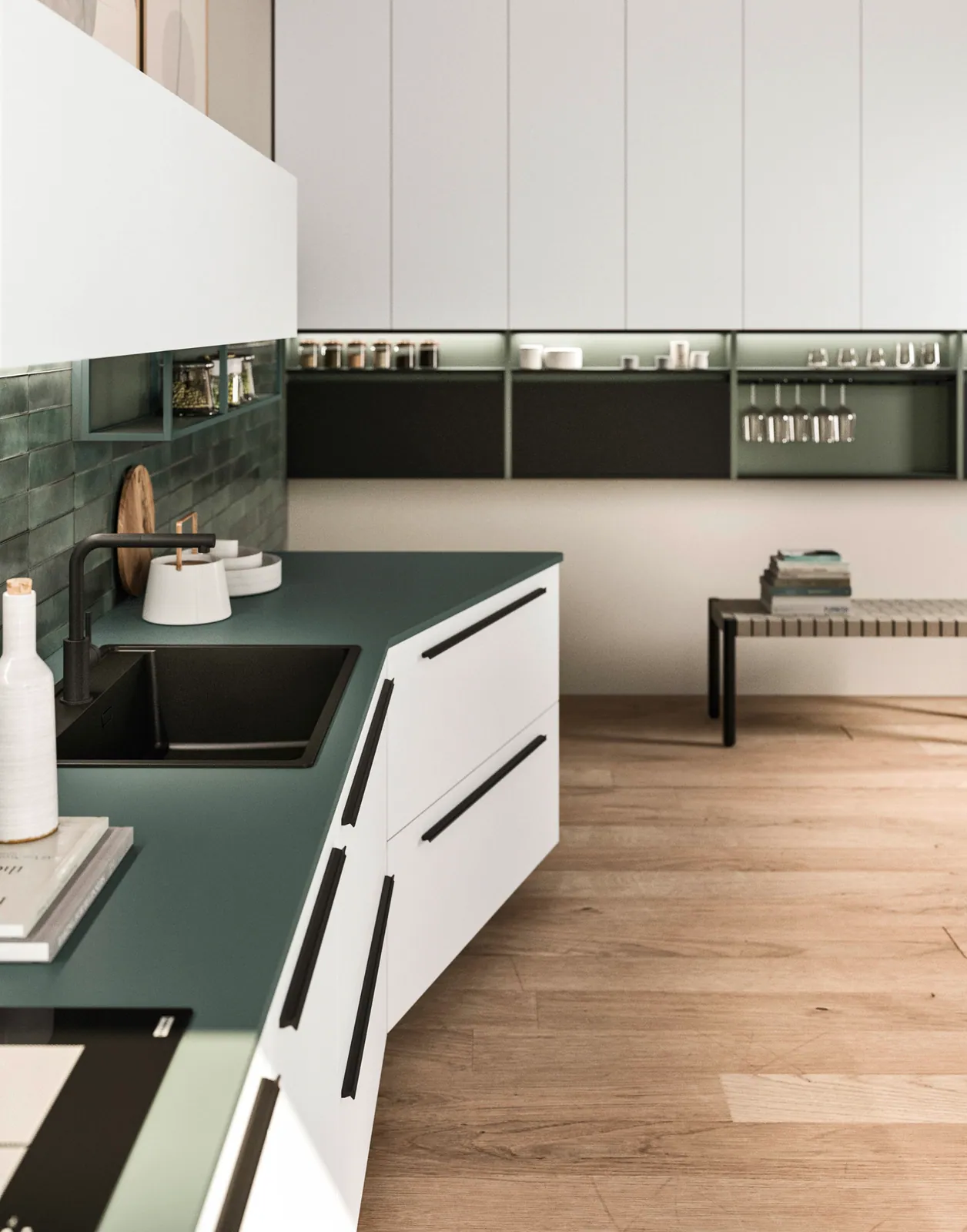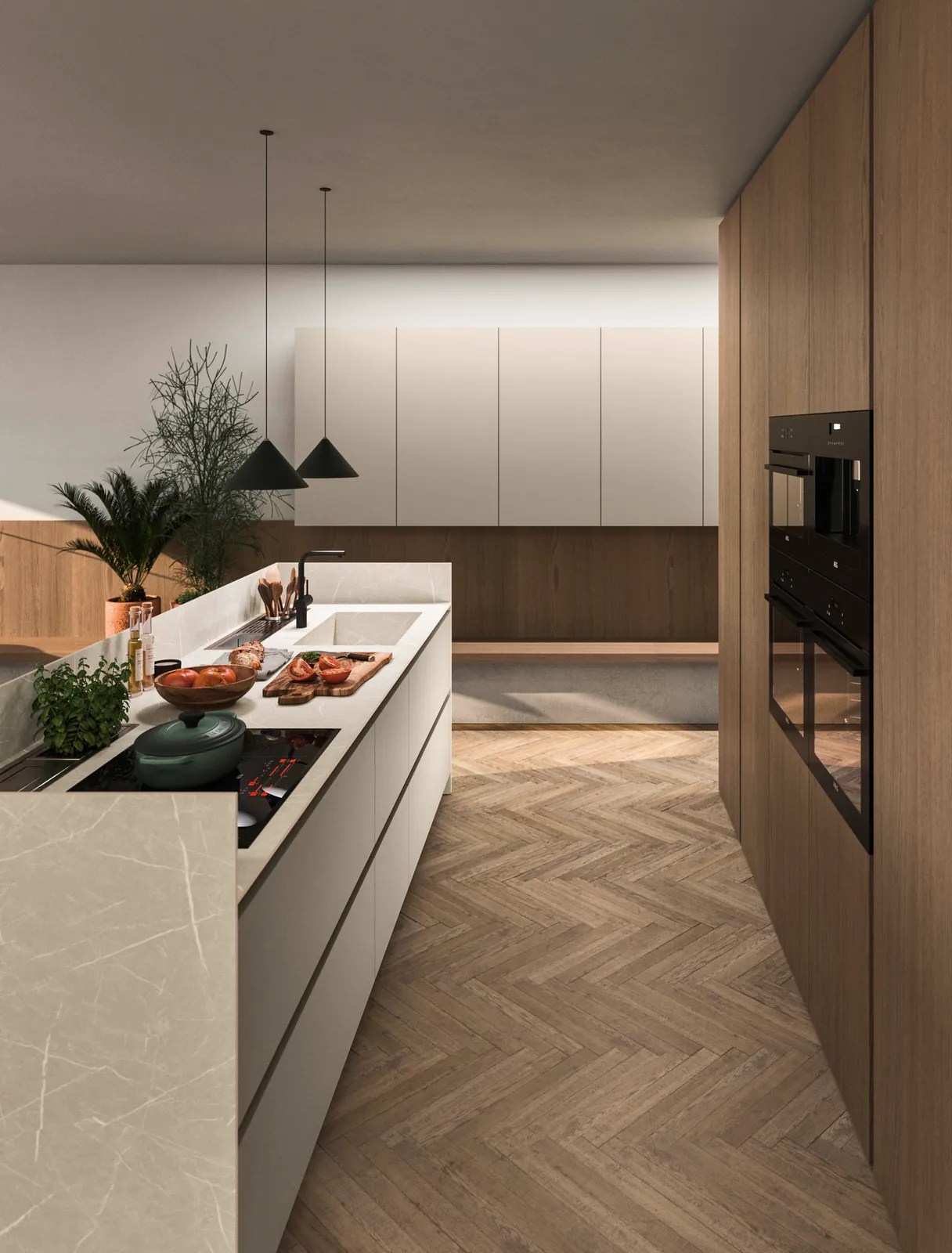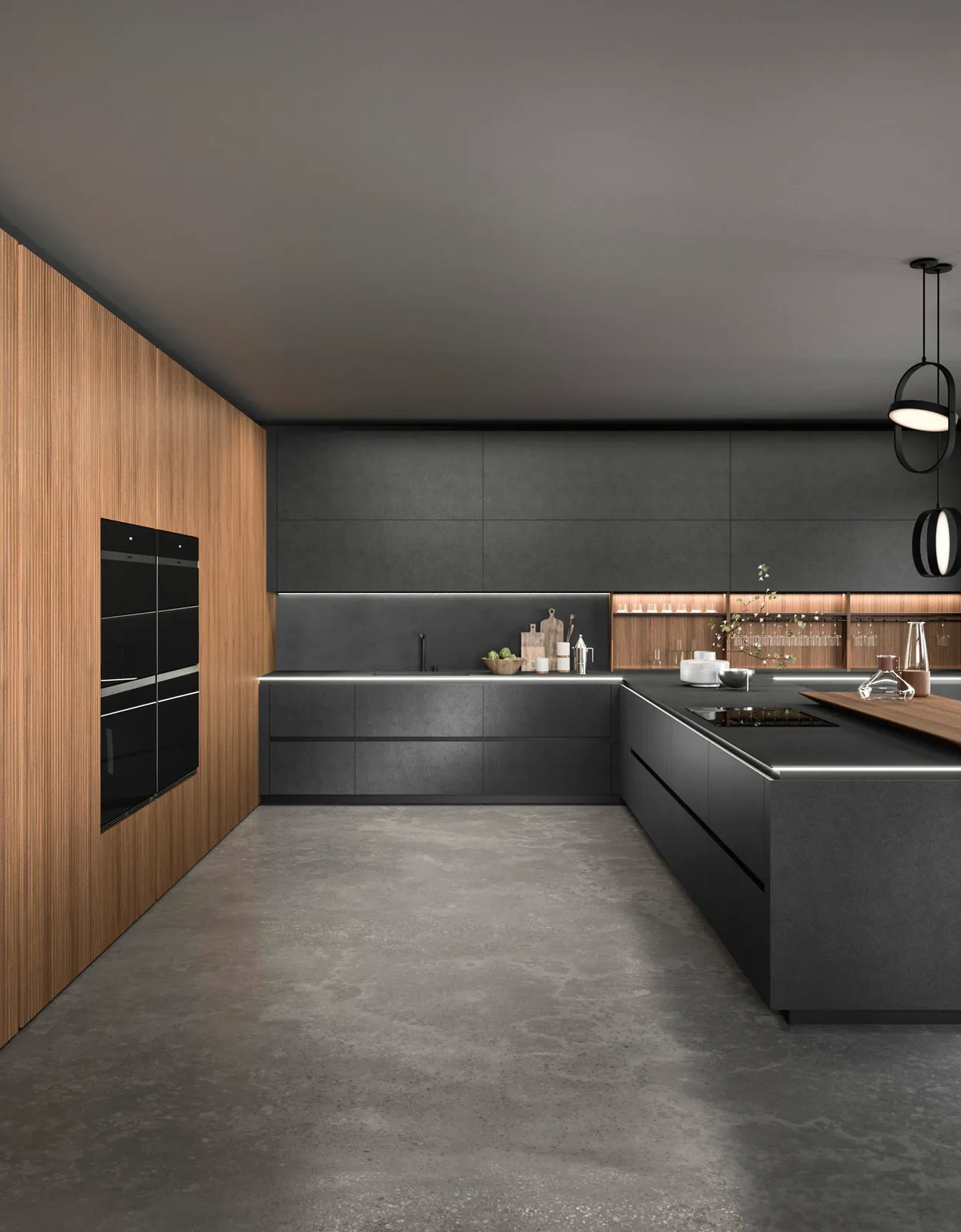
In a bespoke kitchen, it is often the cabinetry and appliances that catch the eye first. Yet it is the worktop that holds everything together: it connects the island to the tall units, carries the gaze from one end of the room to the other, and takes the daily impact of cooking, water and heat. The choice of material is not trivial. It commits you on aesthetics, maintenance and the long-term life of the kitchen.
Three material families dominate the high-end market today: natural stone, large-format ceramic and solid wood. Each has its devotees, its genuine advantages and its constraints, all of which are worth knowing before you decide.
Natural stone: character and depth
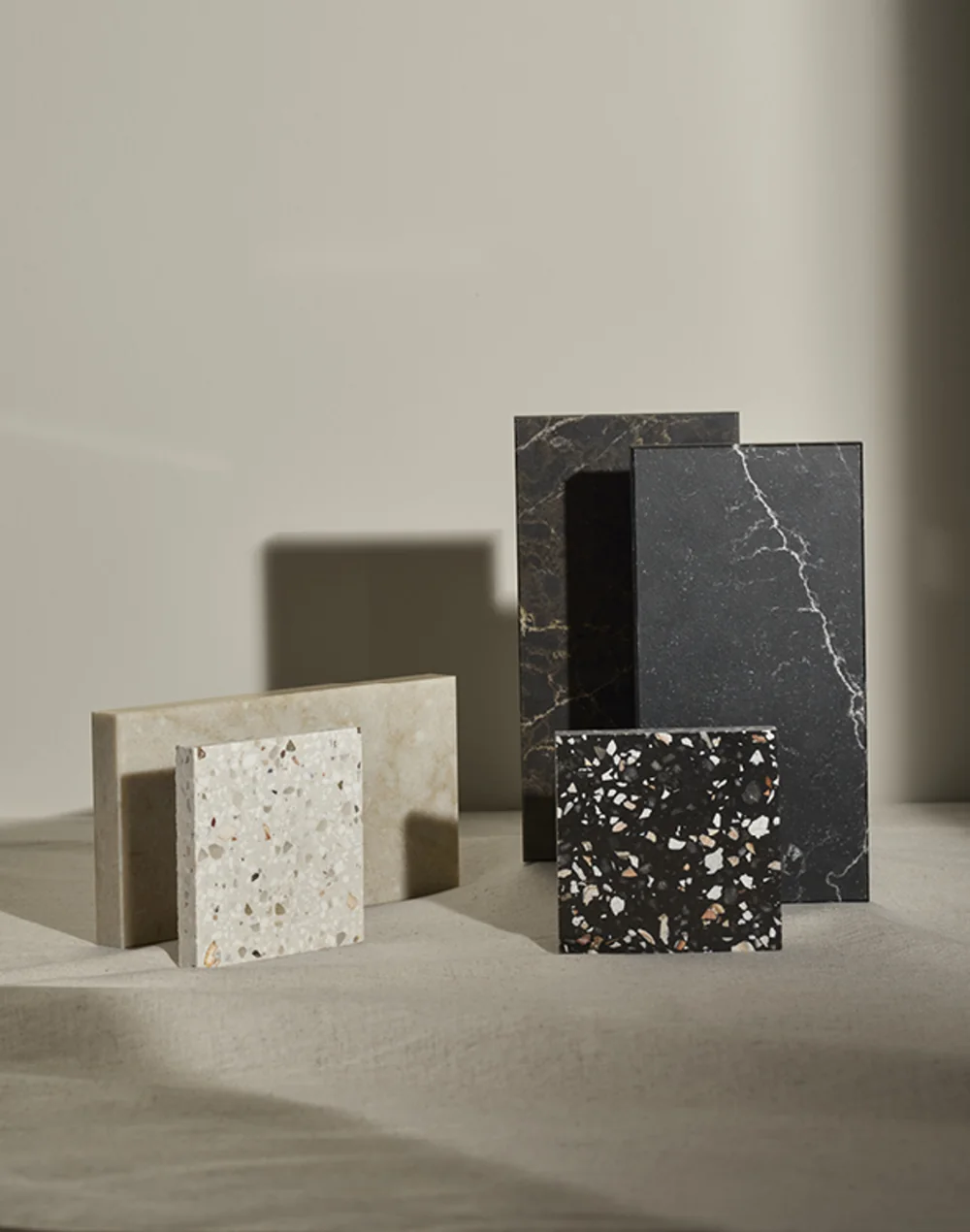
Marble, granite and quartzite share a quality that no synthetic material truly replicates: every worktop is unique. The veining, the colour, the mineral inclusions vary from block to block, sometimes within the same slab. It is precisely this singularity that draws people in, and that justifies the higher investment.
Granite is the most robust of the three. Dense, low in porosity, it stands up well to heat, scratches and mild acids. It is the pragmatic choice for a worktop that sees heavy use. Quartzite, often confused with engineered quartz, is a natural rock with pale tones and fine veins: harder than marble, less immediately striking. Marble itself is the most sought-after and the most demanding. Its dramatic veining makes it a visual anchor, but it patinas over time: lemon juice or vinegar leaves dull marks on the surface. For many people that is not a drawback; they value exactly this quality of marble, the way it holds the trace of everyday life.
In our projects, we often link the choice of stone to the light in the room. A north-facing kitchen benefits from a pale limestone or white marble with grey veining, which reflects the available light. A very sunny space can carry a darker stone, slate or green quartzite, without feeling heavy.
Large-format ceramic: zero-maintenance logic
Ceramic and porcelain stoneware have advanced considerably over the past fifteen years. Large-format slabs, up to 3.2 metres long, make it possible to have a worktop with no joint, or with just one discreet one, which simplifies cleaning and gives a sense of continuity close to natural stone. The available finishes are convincing: matte stone, marble effect, polished concrete, fossilised wood.
The functional advantage is genuine. Ceramic is not affected by acid, heat or everyday scratches. A pan straight from the oven can be set down without any precaution. Stains clean away easily. For a family with young children, or for someone who wants a worktop that asks nothing of them day to day, it is often the most sensible choice.
The limitation lies in the authenticity of the touch. A ceramic worktop imitating marble will never have the mineral coolness of real stone under the hand. It is a matter of personal sensibility: for some, the visual result is enough; for others, the material must be felt to be real.
« The worktop is not just a surface. It is the floor of the kitchen, the thing on which everything rests. »
Solid wood: warmth that requires care
Wood is the historical worktop material, long before stone and ceramic came to challenge it. It is returning to contemporary kitchens today, often combined with other surfaces: wood on the island, ceramic or stone on the wall units. This mixed-material logic is one of the directions we draw most often.
In our kitchens, we work with oak and walnut for wooden worktops. Oak is robust, with a regular grain; it takes oil well and can be repaired easily: a light scratch disappears with fine sandpaper and a coat of food-safe oil. Walnut offers a warmer, near-chocolate tone with golden reflections in the light. It is rarer, more expensive and gives a kitchen an immediate character.
Wood does ask for attention. It cannot tolerate standing water: a puddle left for a few hours starts to raise the grain. The worktop should be oiled two or three times a year, depending on how hard it is used, with a natural food-grade oil. Around the sink, we often advise switching to another material, or specifying an undermount bowl that protects the wood from direct splashing.
How to choose: the right questions to ask
The choice of worktop depends less on taste than on how the kitchen is actually used. A few reference points to guide the decision:
- Intensity of use. A heavily used kitchen, with children and daily cooking, points towards ceramic or granite, materials with no specific upkeep.
- Attitude to patina. If you accept that the material will evolve over time and keep the marks of everyday life, marble or wood will suit you. If you prefer a surface that always looks exactly the same, ceramic is the answer.
- Natural light. A dark kitchen benefits from white stone or pale ceramic, which bounce light around the room. A very bright space can carry a darker material without losing legibility.
- Coherence with the cabinetry. A wooden worktop against matte lacquer fronts creates a warm-cold contrast that works very well. A white marble worktop against white fronts asks the veining to carry the contrast.
- Long-term budget. Natural stone and ceramic do not wear out: they accompany the kitchen for twenty years without intervention. Wood may need sanding and re-oiling every five to ten years, depending on use.
At ODEA, we always discuss the worktop on the first showroom visit: it is a decision made by seeing and touching the materials, not on a screen. Samples change perception, and it is often at that moment that a project finds its definitive direction.